




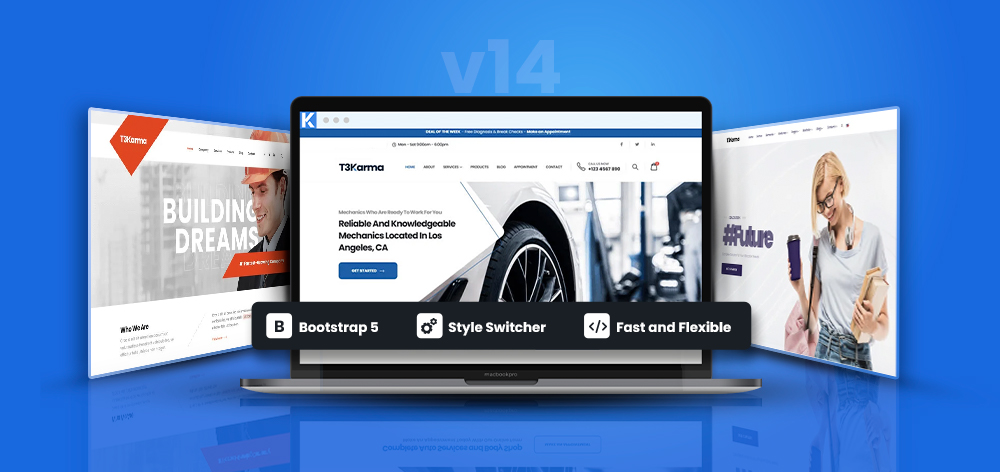
What’s New in T3Karma v14: Modern TYPO3 Features for Scalable Projects
Templates


Many successful websites are large, complex affairs with lots of pages and content. However, sometimes more truly is less in the world of web design. And that’s why, instead of taking a traditional approach, it may be worth your while to create a one-page website on TYPO3.
In this blog, we’ll go more in-depth about the benefits and usage of the Landing page TYPO3 template.

Many successful websites are large, complex affairs with lots of pages and content.
However, sometimes more truly is less in the world of web design. And that’s why, instead of taking a traditional approach, it may be worth your while to create a one-page website on TYPO3.
In this blog, we’ll go more in-depth about the benefits and usage of the Landing page TYPO3 template. Then we’ll show you how to create a one-page website on TYPO3 with some easy steps. Let’s begin!
A TYPO3 one page website puts all key information on a single page, split into sections that a menu scrolls to. To build one, choose hosting, install TYPO3 14, pick a one-page template, set the theme options, add your sections and one main call to action, then test the page.
Updated 27 November 2026 | T3Planet editorial team
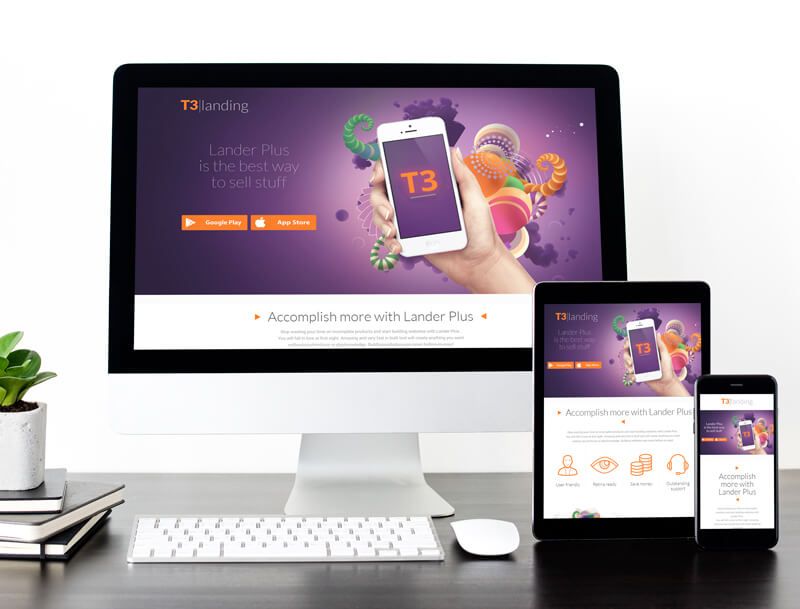
A one-page website is a site with just one page which the user can scroll through. A lot of one-page websites still have a primary menu. People can click on the menu items, but instead of going to another page, they go to another section on the same page. Check out this demo of T3 Splash Landing Page TYPO3 Template to explore.
Most websites have several pages: a home page, a contact page, an about page and pages for each service. A one-pager puts the vital information of your business into sections on one home page. This brings a few benefits:
There is also a trade-off. A single page can rank for several related searches, but separate pages give you more room for distinct topics. If you want to rank for many different topics, plan more pages. The last section of this post helps you decide.
When you are looking for a One Page TYPO3 template, you must keep in mind that your website would only span a single page, you need to be very deliberate about what you include.
It’s important to provide all the information your audience will need, without messing up the page or overwhelming them. Everything you add to your page should be there for a reason.
Check out the detailed guide on Must-Have Elements for Your TYPO3 Landing Website, it contains all the listed essential elements if you’re looking to create a one-page website.
Your domain name is the address of your website on the web. For example, our domain name is t3planet.de/en.
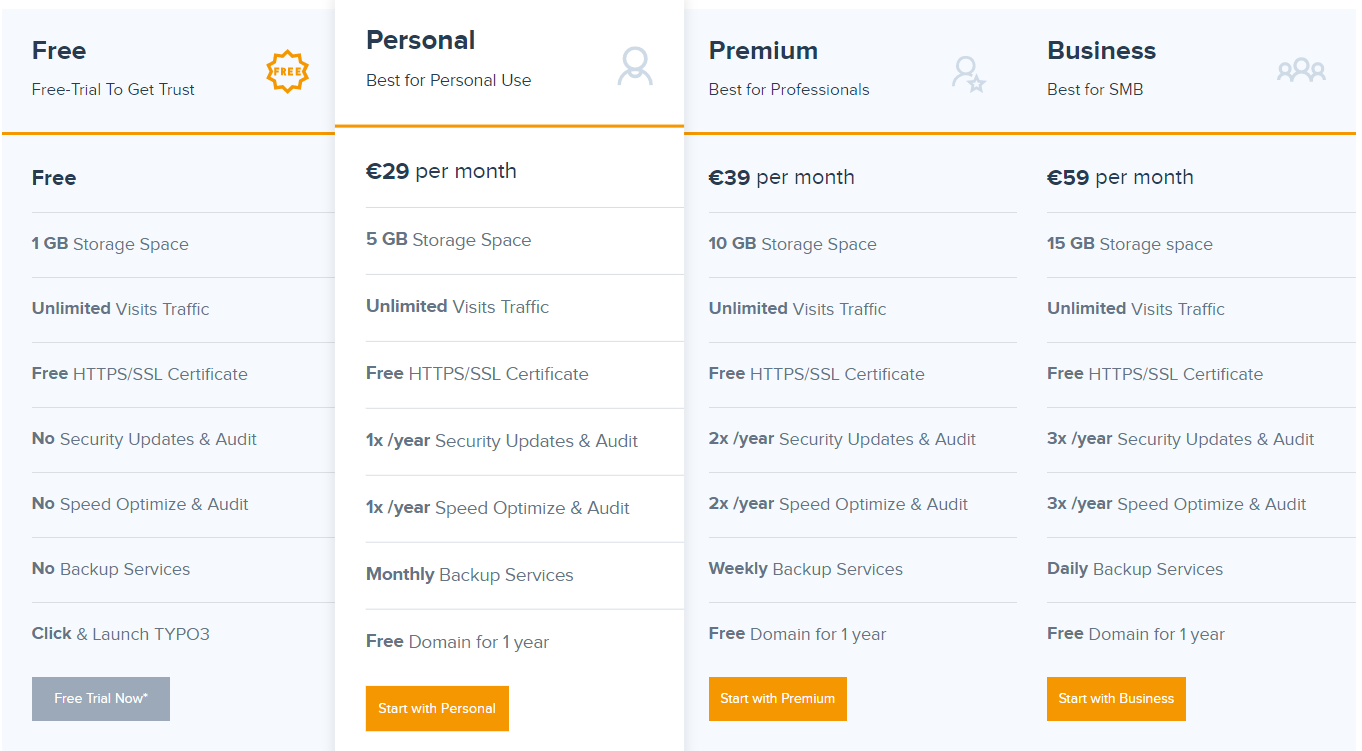
The host is the environment you rent to run your TYPO3 website. Every public website needs a hosting environment, whether managed, SaaS or self-hosted. If you prefer no server work, T3Planet's TYPO3 SaaS looks after hosting, SSL, CDN, backups and updates for you.
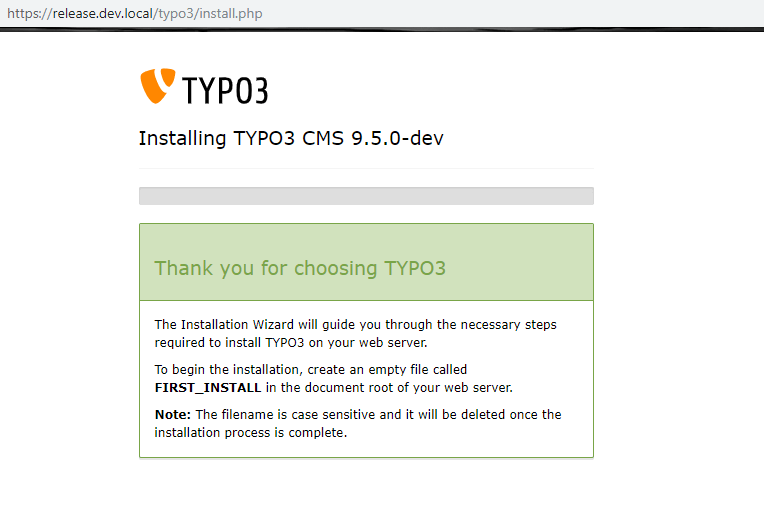
You need Composer, a supported PHP version, an empty project folder and a database. Run these commands, and replace the example URL with your own domain:
mkdir typo3-onepage && cd typo3-onepage
composer create-project "typo3/cms-base-distribution:^14"
vendor/bin/typo3 setup --create-site example.org
Point your web server to the public/ folder. The steps are in the TYPO3 documentation and the TYPO3 Getting Started guide. TYPO3 14 also ships the Camino default theme, so a premium template is a choice, not a must. For the T3Planet template modules, follow the installation guide.
If you prefer not to install anything yourself, see the automated TYPO3 installation guide or use TYPO3 SaaS.
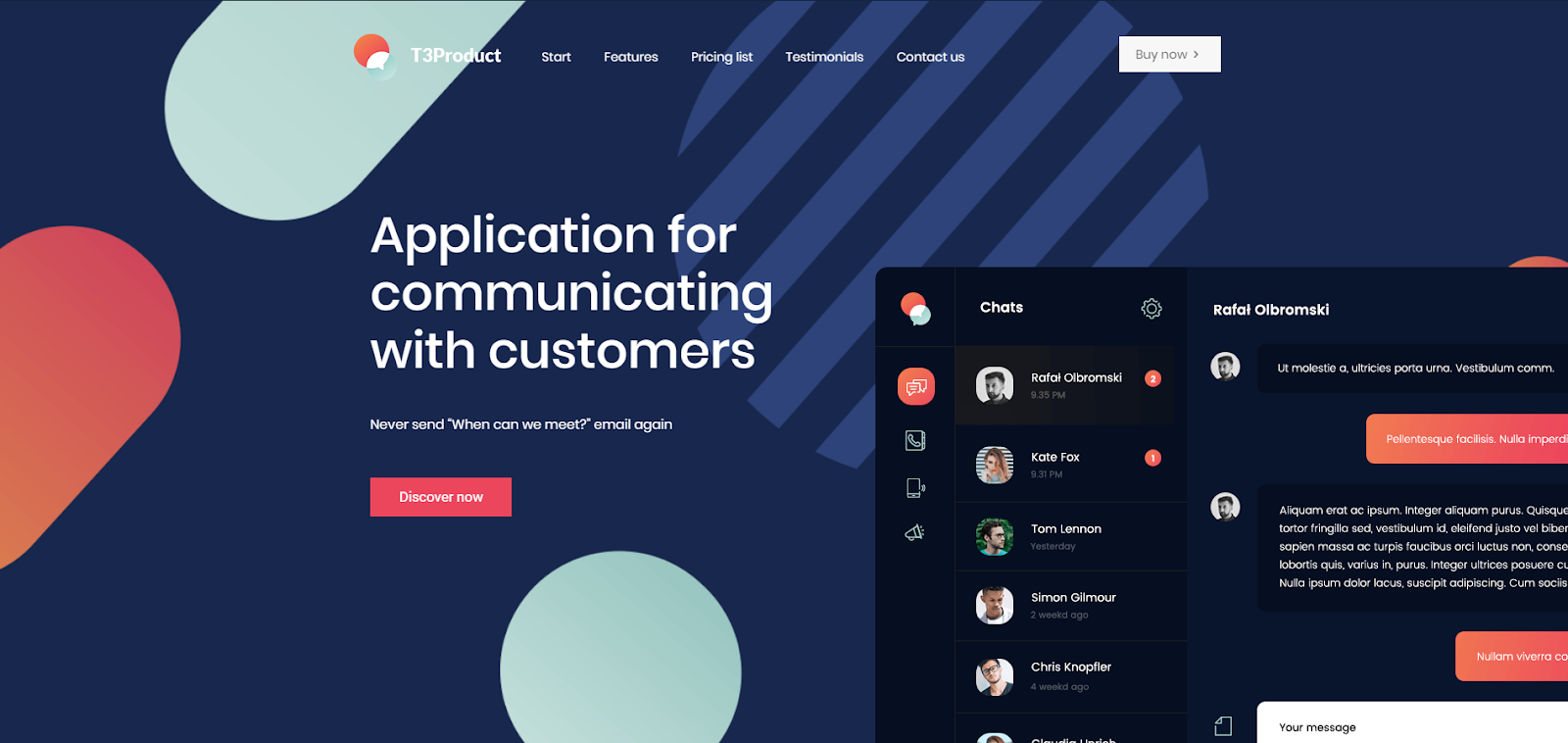
A one-pager works when it has a clear focus. Define one main goal and ask what you want visitors to do. Make that the main call to action, and add smaller secondary actions only if they support it.
Everything on the page should support that action: the information visitors need, the benefits and the next step.
Choose a TYPO3 template that is compatible with your TYPO3 version and has the features you need. A smart choice is a template built for one-pagers, because it already has the sections and the jump menu.
For example, the T3 Mechanic TYPO3 Template is designed for the needs of a mechanic business.
When picking a one-page TYPO3 Template, here’s what you’ll want to look for:
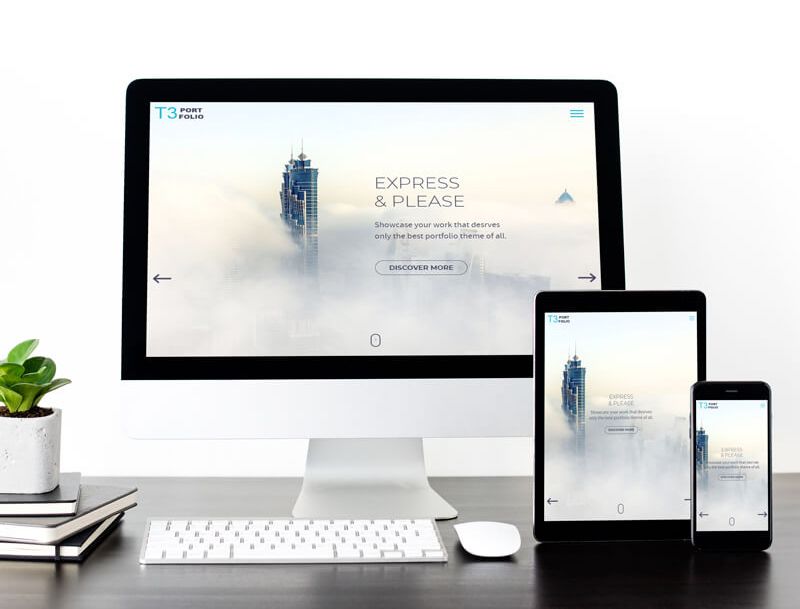
There are plenty of one-page TYPO3 Templates available at T3Planet.
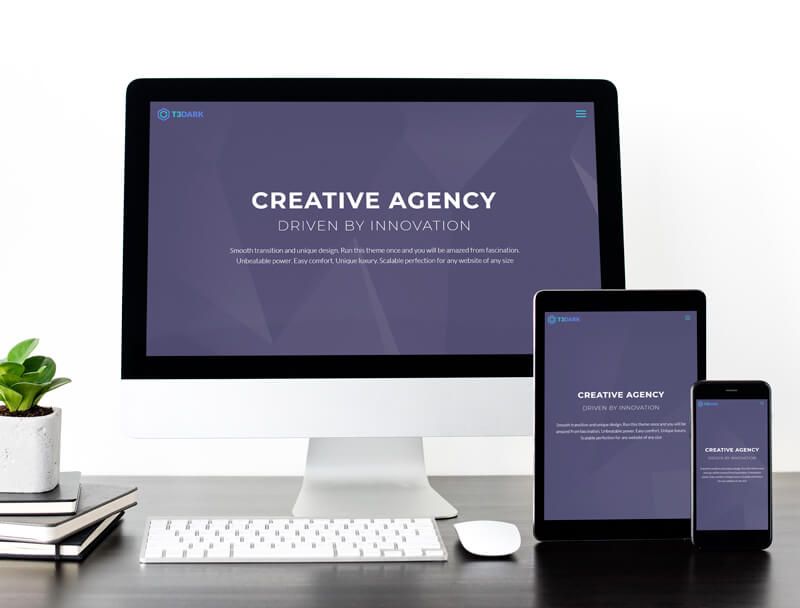
T3 Dark Agency, for example, is a multipurpose TYPO3 Template that’s perfect for concise but comprehensive one-page sites. It also includes pre-built sections for contact info, your bio, a blog, portfolio, and much more.
After installing a template, set it up in the theme options. Templates from T3Planet come with a dedicated dashboard and options that are easy to configure, for technical and non-technical users.
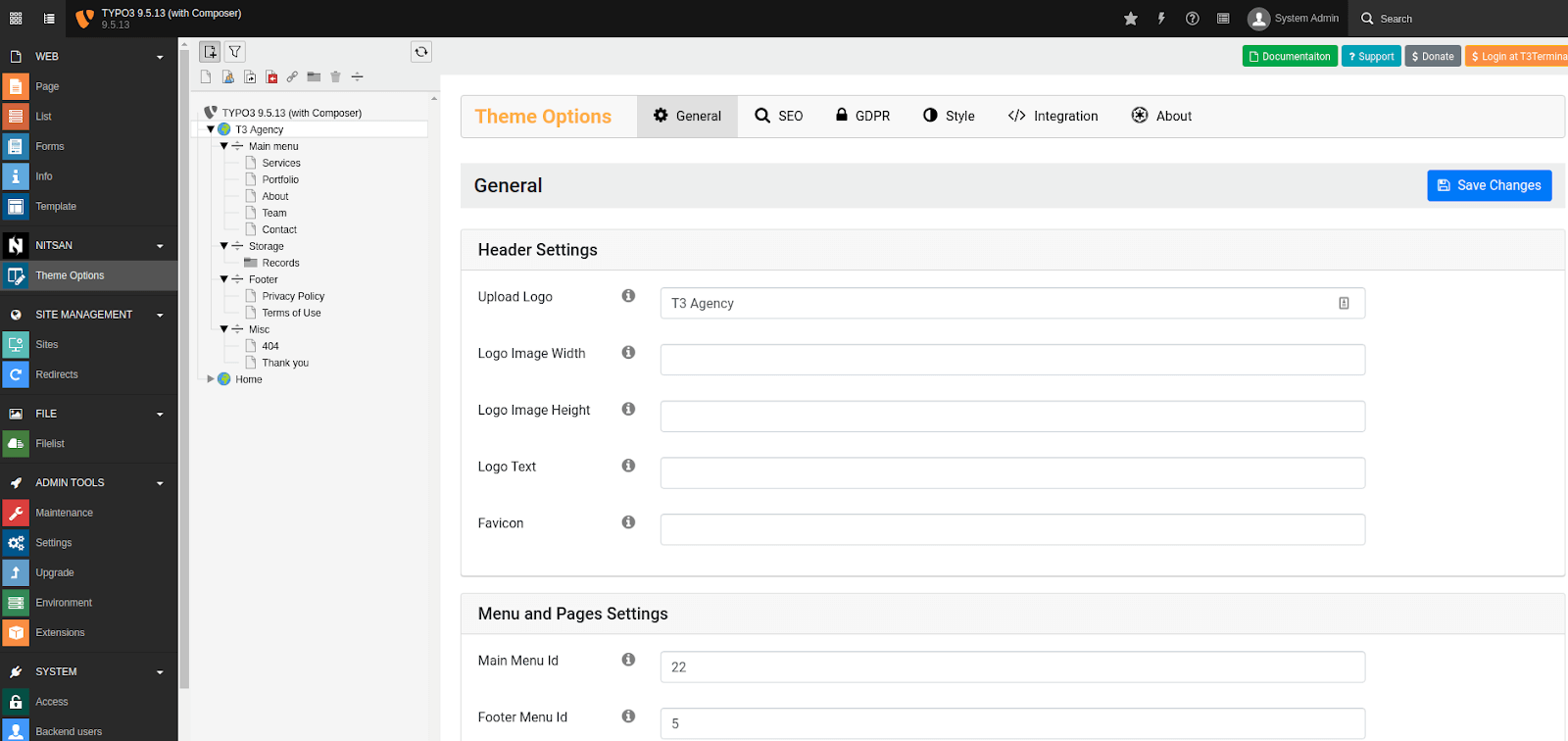
You can configure all the post-installation configuration with the help of detailed documentation for TYPO3 Template for Global Level configurations - https://docs.t3planet.de/en/latest/ExtThemes/GlobalSettingsConfiguration/Index.html
Extensions add functions such as forms or maps. You can search the TYPO3 Extension Repository or the T3Planet TYPO3 extensions. Choose well-maintained extensions and check how each one affects page speed. A short list is easier to maintain.
Once you know what you want to include on your TYPO3 business website, clear about its focus, and have chosen a strong TYPO3 Template, you can start actually designing and integrating the content for your website.
You’ll want it to be appropriate to your audience, reflective of your style, and optimized to fulfill your goals.
However, here are some suggestions to keep in mind as you put your site together:
When the content is in place, test the page on a phone and a laptop, check that every menu jump lands on the right section, and test the form: validation, a successful send, an error case, the email delivery and the consent box. Your one page website is then ready.
If you use TYPO3 SaaS with templates from T3Planet, hosting and updates are handled for you, which is an easy way to get a TYPO3 website running.
Anchor navigation gives each section a unique ID and links the menu to that ID. This basic HTML and CSS example shows the principle:
<nav aria-label="Main navigation">
  <a href="#home">Home</a>
  <a href="#services">Services</a>
  <a href="#contact">Contact</a>
</nav>

<section id="home"><h1>...</h1></section>
<section id="services"><h2>...</h2></section>
<section id="contact"><h2>...</h2></section>

/* CSS */
html { scroll-behavior: smooth; }
section[id] { scroll-margin-top: 90px; }
@media (prefers-reduced-motion: reduce) {
  html { scroll-behavior: auto; }
}
In TYPO3, a template creates the section IDs and the menu links for you, so the exact setup depends on your sitepackage and content elements. Check the template documentation. Keep the menu usable with a keyboard, and keep the scroll-margin-top value at least as high as a sticky header, so the heading is not hidden.
Anchor links such as #services do not create separate pages that Google indexes. Your sitemap lists the page URL, not the anchors. Check these points:
Separate legal pages such as the imprint and the privacy policy are fine next to a one-pager. Google explains this in its URL structure guidance.
A one-pager has clear advantages and some limits. Ask which of these fits you:
In the end it depends on your goals. Look at where your business is today and what you want to reach, then decide.
A one-page website is ideal when visitors need concise information and should be guided toward a specific action. When AI-powered content or assistants are integrated, the AI Foundation for TYPO3 can centrally manage providers, prompts, and access rights without unnecessarily overloading the page.
You can include just the vital information your visitors need to take the action you want to encourage and make the job of maintaining your site as easy as possible.
Do you have any questions about how to create a one-page website with TYPO3? Feel free to let us know in the comments section below!
A one page website in TYPO3 is a site with a single page made of several sections. A menu at the top jumps to each section instead of opening new pages.
Choose hosting and a domain, install TYPO3, decide on one goal, select a one-page template, set the theme options, add content and test the page. The seven steps above explain each part.
No. A compatible TYPO3 template can work if it supports content sections and anchor navigation. A one-page template saves time because it already has the sections and a menu that jumps to them.
Yes, it can rank when the content is useful, indexable and fits the search intent. The limit is that all topics share one URL, so a site with several pages usually fits better if you want to rank for many different topics.
Not always. Many templates already include the sections you need. Add an extension only for a function you are missing, choose well-maintained ones and check their effect on speed.
Give each content section a unique ID and link the menu items to those IDs, for example #services or #contact. A TYPO3 template usually does this for you, so check its documentation.
Yes. With TYPO3 SaaS, hosting, SSL, CDN, backups and updates are handled for you, so you can work on the content and the template.
Want to go further? See all TYPO3 extensions from T3Planet.

Markus Neumann
Template Support ManagerMarkus lives and breathes TYPO3 templates. Known for his structured thinking and eye for detail, he has helped hundreds of customers build faster, cleaner TYPO3 websites through T3Planet Shop. If there’s a template issue, Markus has probably solved it before.
More From Author