TYPO3 search has traditionally relied on multiple engines like KE Search and indexed_search and Solr and faceted search, which all function to retrieve search results through keyword matching and structured query processing.
The three systems offer distinct strengths but their shared constraint presents results to users as lists which users must interpret to find meaning. The T3AS v2.1 update brings major improvements to the user experience.
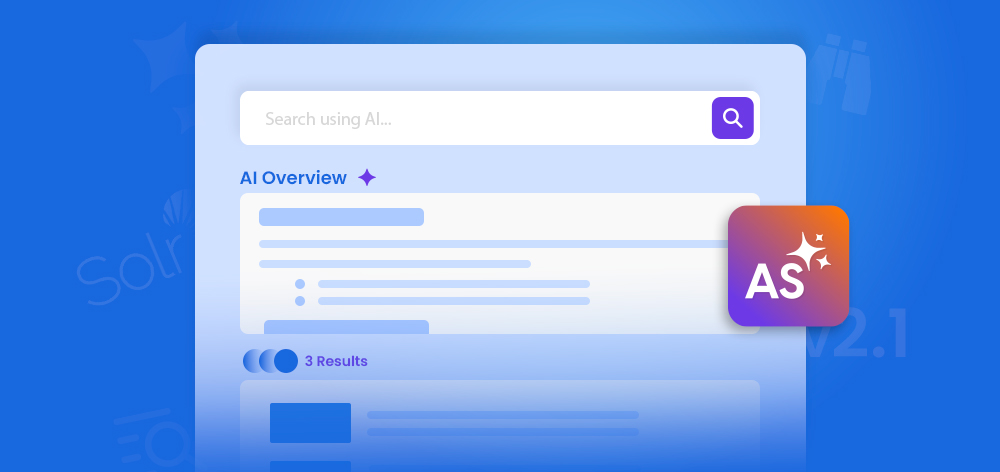
The new AI-based overview system operates above all search engines to change query responses into user-friendly answer-first formats while maintaining original search results as organized reference material.
The Evolution of TYPO3 Search Experience
The search capabilities of TYPO3 system have improved to handle more demanding requirements which developers face when building content-rich websites.
The basic user experience delivered search results which users accessed by entering specific keywords despite the different system implementations which were used to achieve this function.
The typical operation of TYPO3 search system
User enters a query
Search engine matches keywords in indexed content
The system provides users with a list of webpages which it ranks according to their relevance
Users manually interpret results to find ansThe Limitation of Traditional Search In TYPO3 wers
The role of KE Search, indexed_search, Solr, and faceted search
KE Search: Lightweight, TYPO3-native search for simpler sites
The indexed_search extension functions as the core component which enables users to perform basic full-text searches
Solr Search: provides users with sophisticated ranking options and system scalability.
Faceted search: Adds filters and structured navigation over results
Site content search: Uses raw TYPO3 site content directly when no dedicated search engine is implemented, enabling basic search without additional infrastructure
Why multiple search engines existed in TYPO3 ecosystem
Different project sizes required different levels of complexity
The system needs to offer users both lightweight and enterprise-level solutions
Organizations require different infrastructure solutions which affect their system performance needs.
A single solution failed to address all user requirements which existed in the system.
The Limitation of Traditional Search In TYPO3
TYPO3 search systems are powerful, but they still follow a traditional model that comes with clear structural limitations in how users discover and interpret information.
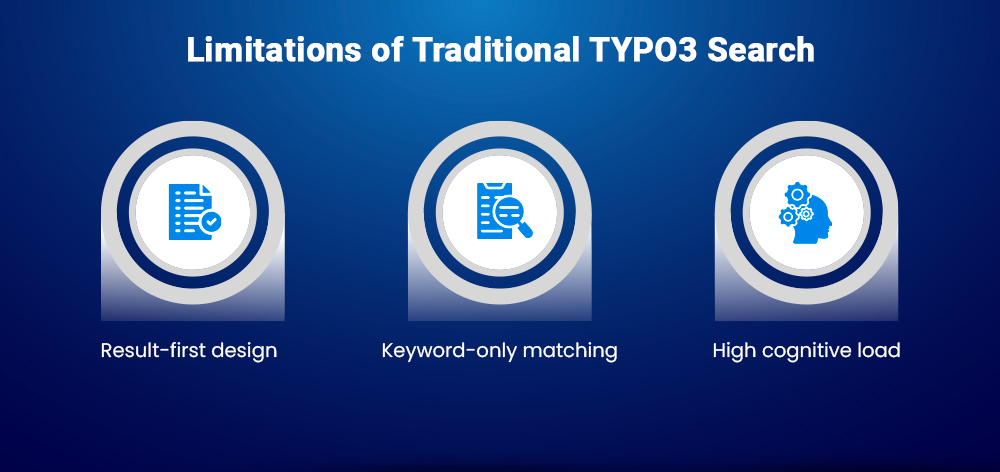
Result-first architecture across all search types
TYPO3 search systems (KE Search, indexed_search, Solr, faceted search, and site content search) follow a result-first model
Search results are always displayed as lists before any interpretation or explanation
There is no intermediate layer that explains or summarizes the query intent
Keyword dependency and lack of intent understanding
Search engines primarily rely on keyword matching
Queries are processed based on exact or partial text matches
There is limited or no understanding of user intent or semantic meaning
Complex or conversational queries often produce less relevant results
Cognitive load placed on users
Users must manually scan multiple results to find relevant information
Each result must be individually interpreted and validated
This increases time-to-answer and user effort
The responsibility of understanding the content is fully shifted to the user
The Changes in User Expectations
User expectations regarding searches have changed dramatically due to new technologies based on artificial intelligence (AI), which deliver direct responses instead of lists of links.
How Google AI Functions, and The Impact of Chatbot Technology for Search
People looking for information online are exposed to summary information generated by artificial intelligence (AI) through different search engines (e.g., Google).
People use chatbots for information search much differently than they have used/searches previously.
People searching for information online now look for answers right away from a source instead of only to find web pages to gain understanding.
User “answer first” searching.
When someone searches for information online, they expect the information to be provided to them as an answer at the top of the search results page.
That is, the type of query phrased in an informal, conversational manner generally will be answered in an informal, conversational, and direct manner at the beginning of the results.
The expectation of the user is for reduced effort needed to understand or navigate many sources for their answers (i.e., direct access to immediate resources as answers to their queries).
Reducing user-centricity in link and use of traditional searches
More users are finding “10 blue links”-type search results uninformative for their current needs.
Most users are unwilling to "eyeball scan" and "eyeball compare" to find the answer to their query across multiple search result pages.
There is a shift away from using search results to provide the answer to a user's question (via an aggregated summary and then source/reference) and instead to use search results to direct users immediately to answers and then sources.
The Missing Layer In TYPO3 Search Systems
TYPO3 search has traditionally focused on strong retrieval capabilities, but modern user expectations are introducing an additional layer of interpretation that sits above the search engines.
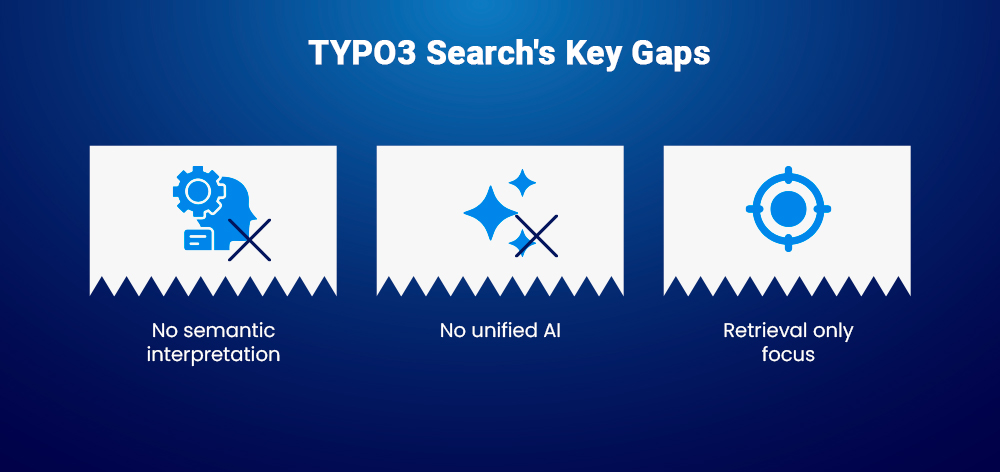
Lack of a semantic interpretation layer.
In TYPO3, the current search systems work at the keyword and indexing level.
The search systems do not have a dedicated layer for interpreting/summarising the intent of the user before displaying the search results.
Instead, the meaning of the search is derived from the results received from the searches.
Lack of unified intelligence across all search engines.
The KE Search, indexed_search, Solr and faceted search, work in isolation.
There is no layer of shared intelligence that is used to standardise the way that we understand our searches across these search engines.
Further to this, each search engine retrieves content in different ways but there is no standard for the interpretation of the content.
Search engines are a response to the retrieval of content.
The search systems provide a way to retrieve, rank and display relevant content.
The function of understanding, explaining or putting the searches into context is completed outside of the search layer.
As such, this means that searching will be performed; hence searching does remain a low-cost/high-performing function.
However, searching has a retrieval-focus/limited-return.
Introducing the AI Overview Layer in T3AS v2.1
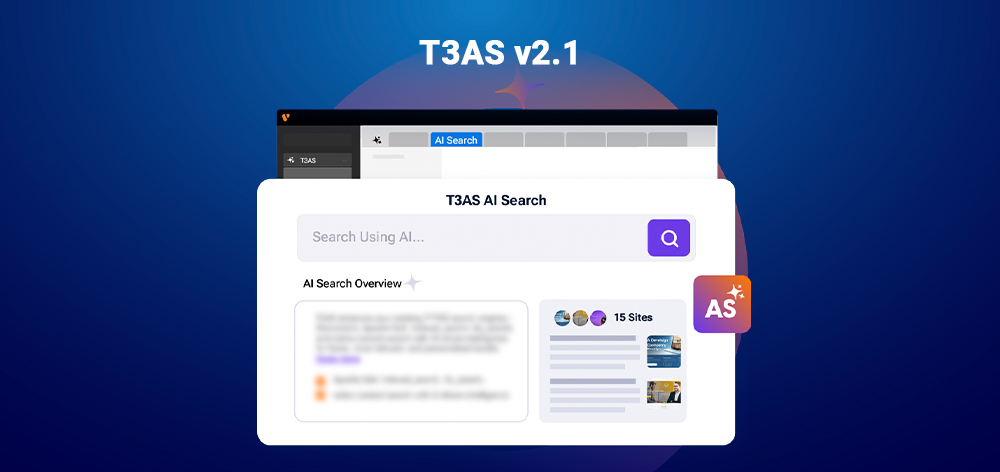
T3AS v2.1 introduces an additional intelligence layer on top of existing TYPO3 search systems, designed to interpret queries before results are shown.
All User Queries Are First Understood By An AI Layer
The System Uses The AI Layer To Provide A Contextual Understanding Of The User’s Query Intent
Users Will See This Contextual Understanding Prior To The Traditional Search Results
Users Will Experience A Unified Experience Across All TYPO3 Search Systems (KE, Solr, Indexed Search, Faceted Search)
All TYPO3 Search Systems Contribute To The Unified Experience For Users
Regardless Of Which TYPO3 Search System Is Used, Users Will Experience Unified Search Results
AI Overview Built Using RAG (Retrieval-Augmented Generation) Architecture
The Material Presented In The AI Overview Is Also Retrieved From The TYPO3 Search Engines
The Content Retrieved Using The AI Layer Provides The Necessary Context For The AI To Generate Relevant, Grounded Responses
RAG-based architecture behind the AI overview
The AI overview is powered by a Retrieval-Augmented Generation (RAG) approach
Relevant content is retrieved from TYPO3 search engines first
The AI then uses this context to generate accurate, grounded responses
How the New Search Flow Works
T3AS v2.1's updated search flow introduces a layered approach that integrates AI interpretation and traditional search tasks.
User query enters the system
A user posts a search query via any TYPO3 search interface
AI generates contextual overview
The AI interprets the query and produces a concise, informative overview
This offers a rapid grasp of the subject or intent
Search engine retrieves supporting results
KE Solr indexed_search or faceted_search fetches content that corresponds to the query
Results still open to the user for more in-depth exploration
Combined output experience (overview + results)
Users are presented with the AI-generated overview first
Then the traditional search results act as the references
It is a combination of the experience of understanding + discovery
What Changes for Each TYPO3 Search Type
The introduction of the AI overview layer in T3AS v2.1 does not replace existing search engines, but extends them with a consistent interpretation layer above them.
KE Search under AI layer
KE Search continues to handle indexing and result retrieval
AI layer adds contextual understanding before results are shown
Simple setups gain an intelligent overview without changing their search backend
indexed_search under AI layer
TYPO3 core search remains responsible for full-text matching
AI enhances basic search results with a pre-generated overview
Solr continues to provide advanced ranking, scoring, and scalability
AI layer abstracts complexity by summarizing intent first
Enterprise search results become easier to interpret at a glance
Faceted search under AI layer
Facets still structure and refine results
AI provides a high-level explanation before filtering begins
Combines structured navigation with contextual understanding
From Search Engine-first to AI-first Architecture
T3AS v2.1 introduces a shift in how search is experienced, where interpretation is no longer tied directly to the search engine layer.
Search engines as retrieval backends
KE, indexed_search, Solr, and faceted search continue operating as data retrieval systems
Their primary role remains indexing, filtering, and ranking content
They function as reliable backend layers for information access
AI as the primary interpreter
AI becomes the first layer that processes user intent
It translates queries into meaningful context before results are displayed
The focus shifts from “what matches” to “what the user is trying to understand”
Reordering of search hierarchy in TYPO3
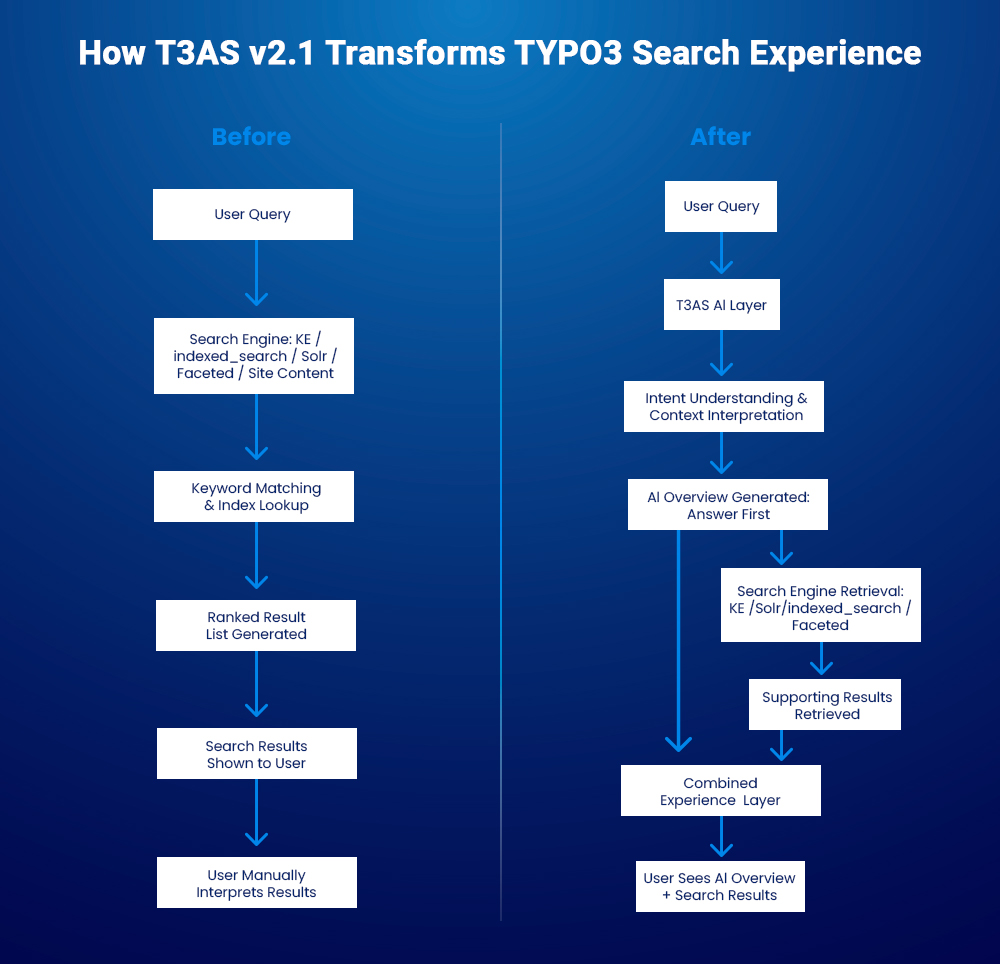
Traditional hierarchy: query → search engine → results
New hierarchy: query → AI interpretation → search results → user exploration
This reorders the experience without changing underlying search engines
Impact on User Experience
The introduction of an AI overview layer changes how users interact with TYPO3 search by adding a direct understanding layer on top of traditional results.
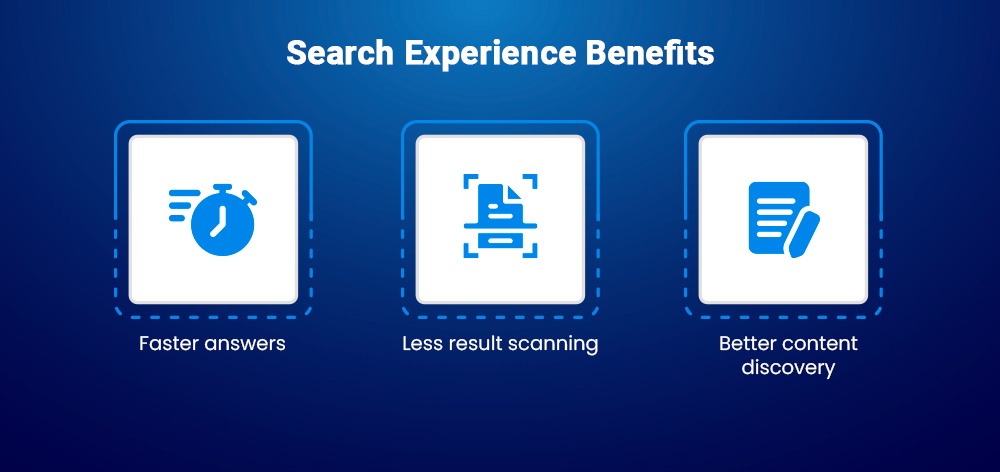
Faster access to answers
Users receive an AI-generated overview before exploring results
Key information is surfaced immediately based on intent
Reduces the time required to reach relevant content
Reduced dependency on result scanning
Users no longer need to manually review multiple search results first
The overview provides a starting point for understanding
Traditional results remain available but become secondary
Improved content discoverability
Content is surfaced based on meaning, not just keywords
Related information is grouped through AI interpretation
Helps users discover relevant pages they might otherwise miss
What this Means for TYPO3 Projects Going Forward
This shift introduces a new way of thinking about search inside TYPO3-based projects, where search is no longer only a utility but part of the user experience itself.
Search becoming an experience layer, not just a feature
Search evolves from a backend utility into a guided experience
AI adds a layer of interaction and understanding
The search interface becomes part of content consumption
Increased value of structured content
Well-structured content improves AI interpretation quality
Clear headings, metadata, and content hierarchy become more important
Content is not only indexed, but also “interpreted”
Shift in design thinking for editors and developers
Editors focus more on clarity and semantic structure
Developers consider AI interpretation alongside search configuration
UX design includes both results presentation and AI-driven context layers
Conclusion
T3AS v2.1 introduces an AI overview layer on top of KE Search, indexed_search, Solr, and faceted search, shifting TYPO3 search from a results-first to an understanding-first experience.
Instead of only listing results, users now get a contextual AI overview before exploring content, making search faster, clearer, and more intuitive.
The AI overview layer generates a contextual summary before traditional TYPO3 search results are displayed, helping users understand their query faster.
T3AS v2.1 works with KE Search, indexed_search, Solr, faceted search, and direct site content search.
No. T3AS v2.1 works on top of existing search systems and enhances them with AI-powered interpretation and contextual summaries.
It reduces the need to manually scan multiple results by presenting an AI-generated overview before the result list appears.
T3AS v2.1 uses Retrieval-Augmented Generation (RAG) to retrieve relevant TYPO3 content first and then generate grounded AI responses based on that context.
Yes. T3AS v2.1 can also work directly with TYPO3 site content when no dedicated search engine is configured.
No. Existing search results remain fully available and continue to function normally beneath the AI-generated overview layer.
Yes. T3AS v2.1 is designed to work across both lightweight and enterprise TYPO3 search environments, including large Solr-based implementations.
Want to Customize Your AI Universe Product?
Discover AI-powered TYPO3 solutions from T3Planet Shop and customize them for your project needs.
Jürgen Pietschmann is a T3Planet Product Consultant at T3Planet Shop. He specialises in integrating AI into editorial workflows – from intelligent content creation and automated SEO to AI-powered search and chatbot solutions for TYPO3 sites. As a technical consultant for T3Planet AI Universe, he works closely with agencies and editorial teams on practical TYPO3 implementations. Jürgen has been writing the This Month in TYPO3 series since December 2025 and has spoken at T3CON25 and TYPO3 Developer Days 2026 (T3DD26), where he co-presented Content Editing Unlocked.



Jürgen Pietschmann
AI Consultant for TYPO3Jürgen Pietschmann is a T3Planet Product Consultant at T3Planet Shop. He specialises in integrating AI into editorial workflows – from intelligent content creation and automated SEO to AI-powered search and chatbot solutions for TYPO3 sites. As a technical consultant for T3Planet AI Universe, he works closely with agencies and editorial teams on practical TYPO3 implementations. Jürgen has been writing the This Month in TYPO3 series since December 2025 and has spoken at T3CON25 and TYPO3 Developer Days 2026 (T3DD26), where he co-presented Content Editing Unlocked.
More From Author