


Claude Code & TYPO3: A Practical Developer Guide
Development

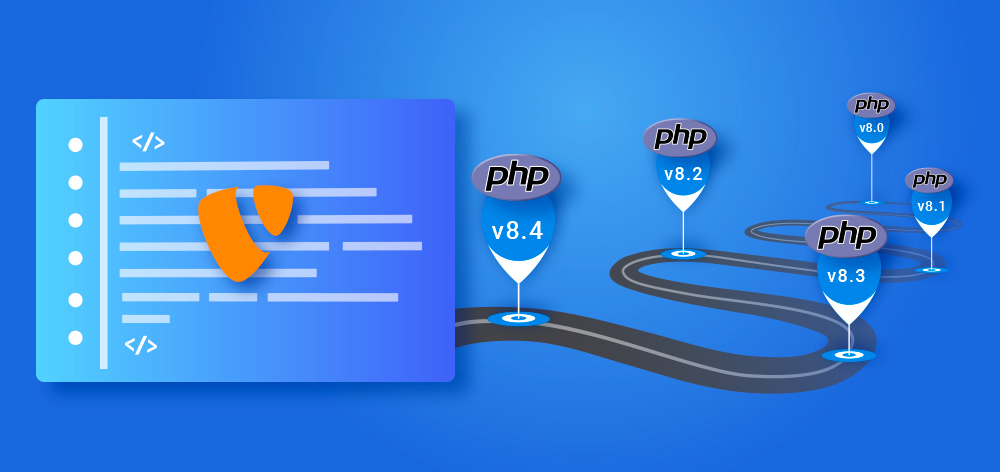
Your TYPO3 and PHP versions must be compatible. If they are not, your website faces security vulnerabilities, performance instability, and compliance risks.
As of 2026:
When a PHP version reaches End of Life (EOL), it no longer receives security updates. At the same time, newer TYPO3 releases require modern PHP versions to run efficiently. An outdated combination can lead to extension conflicts, hosting restrictions, and increased attack surface.
This guide provides a clear 2026 compatibility overview, including supported versions, minimum requirements, lifecycle timelines, and upgrade recommendations.
Below is the current compatibility status for active and legacy TYPO3 versions.
For new installations in 2026, TYPO3 v13 on PHP 8.2 or higher is the preferred baseline.
The following versions are End of Life:
Running EOL software means:
These systems require an upgrade plan.
Use the latest supported TYPO3 version with PHP 8.2+ to ensure security, performance, and upgrade flexibility.
The table below provides a clear overview of which PHP versions are compatible with each TYPO3 release. Use this matrix to verify whether your current setup is supported and suitable for production use in 2026.
| TYPO3 Version | Supported PHP Versions | Support Status | Recommended for New Projects | Database Requirements |
| v13.x | 8.2 – 8.3 | Fully Supported | Yes | MySQL 8.0+ / MariaDB 10.4+ |
| v12 LTS | 8.1 – 8.2 | Long Term Support (LTS) | Yes | MySQL 8.0+ / MariaDB 10.3+ |
| v11 | 7.4 – 8.2 | Extended LTS (Paid, Security Fixes Only) | No | MySQL 5.7+ / MariaDB 10.2+ |
| v10 | 7.2 – 7.4 | End of Life (EOL) | No | MySQL 5.5 – 8.0 |
| v9 | 7.2 – 7.4 | End of Life (EOL) | No | MySQL 5.0 – 5.7 |
| v8 and older | 7.0 – 7.4 (varies by version) | End of Life (EOL) | No | Legacy MySQL versions |
If your TYPO3 version or PHP version falls into the EOL category, an upgrade strategy should be planned without delay to maintain security, compliance, and long-term stability.
For official lifecycle timelines and release schedules, refer to the TYPO3 roadmap:
https://typo3.com/typo3-cms/development-roadmap/roadmap
When planning your TYPO3 environment, two questions matter:
In 2026, the clear direction is PHP 8.2 and above.
Each TYPO3 version has a defined minimum:
The minimum ensures compatibility, not optimal performance or long-term stability.
For secure and stable production systems:
PHP 8.2 offers active security support, strong performance improvements, and broad extension compatibility. When possible, use the latest officially supported PHP version for your TYPO3 release.
Before adopting newer PHP releases such as 8.4:
Premature upgrades without validation can cause runtime and dependency issues.
Even if technically compatible with older TYPO3 versions, outdated PHP releases introduce risk:
For 2026 production environments, PHP 8.2 or higher is the secure and future-ready baseline.
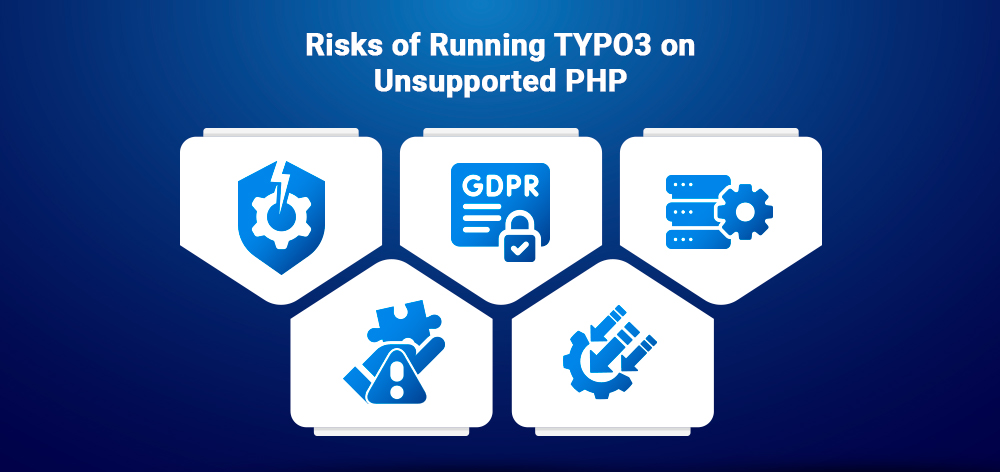
An unsupported PHP version may still allow TYPO3 to function, but it significantly increases operational risk. Once PHP reaches End of Life (EOL), security updates stop. The system remains exposed to known vulnerabilities.
The consequences are predictable.
Without active security patches:
Running unsupported PHP directly expands your attack surface.
In regulated environments, outdated infrastructure raises compliance concerns:
Maintaining supported software is part of demonstrable risk management.
Hosting providers routinely deprecate EOL PHP versions.
This can result in:
Planned upgrades prevent reactive downtime.
Modern TYPO3 extensions and Composer packages target supported PHP releases.
On outdated PHP:
This accelerates technical debt.
Older PHP versions lack performance and memory optimizations found in newer releases.
The result:
Upgrading PHP is often the simplest way to improve TYPO3 performance and reduce risk.
In short:
Running TYPO3 on unsupported PHP may seem manageable today, but it creates security, compliance, and operational risks that grow over time.
TYPO3 follows a structured and predictable release lifecycle. Understanding LTS and ELTS is essential for long-term planning and risk control.
Each Long Term Support (LTS) release provides:
During this period, the TYPO3 core is fully maintained and suitable for production environments that require stability and predictable updates.
After the LTS phase ends, Extended Long Term Support (ELTS) is available as a paid program.
ELTS includes:
ELTS does not include:
ELTS maintains security coverage, but it does not modernize the system.
ELTS can be appropriate when:
In this context, ELTS serves as a controlled transition period.
Upgrading is the preferred option when:
ELTS is a temporary safeguard. For mission-critical systems, upgrading to a supported TYPO3 version is the more sustainable strategy.
If your TYPO3 version is outdated, upgrading is not just technical housekeeping, it’s risk management. Here’s what to do based on your current setup, and how to quickly check your PHP version.
If you’re several versions behind:
Structured upgrades reduce risk and downtime.
Before upgrading, confirm your current PHP version.
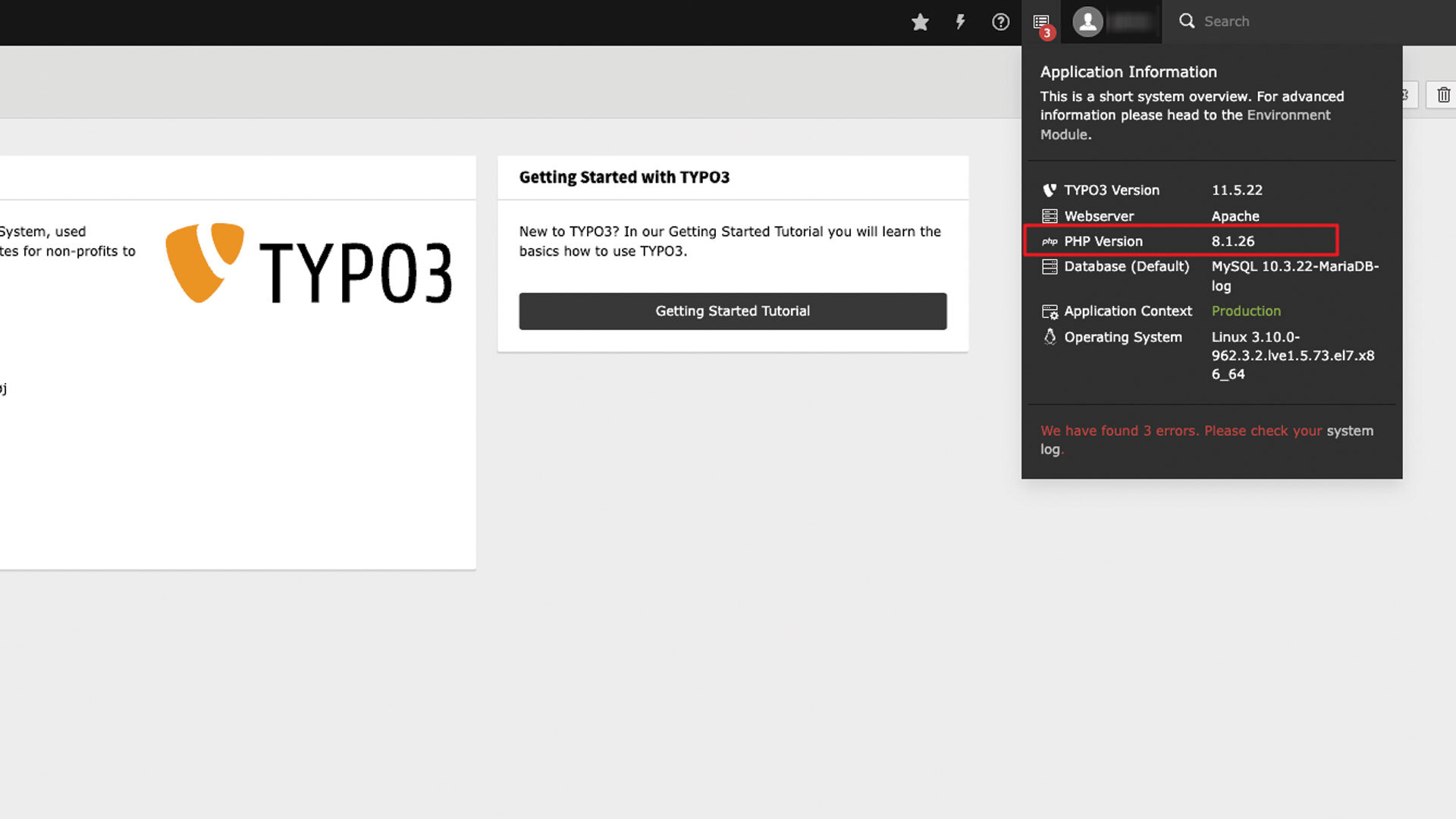
Create a file named phpinfo.php with:
<?php phpinfo(); ?>
Open it in your browser to see the PHP version.
phpinfo.php file immediatelyKnowing your TYPO3 and PHP versions is the first step toward a safe, future-ready setup.
PHP compatibility alone is not enough. A stable TYPO3 installation also depends on correct server configuration, database versions, and system alignment. The table below summarizes the key environment requirements for 2026.
| Requirement Area | Minimum Requirement | Recommended for Production (2026) | Why It Matters |
| PHP Extensions | pdo_mysql, mbstring, intl, json, openssl, tokenizer, xml | All required extensions enabled + OPcache active | Missing extensions cause installation or runtime failures |
| Database (MySQL) | MySQL 8.0+ (for TYPO3 v13/v12) | MySQL 8.0 latest stable | Ensures performance, security updates, and compatibility |
| Database (MariaDB) | MariaDB 10.3+ (v12), 10.4+ (v13) | Latest stable MariaDB release | Required for stable DBAL and schema handling |
| Composer Version | Composer 2.x | Latest Composer 2 release | Required for dependency management and modern TYPO3 setups |
| CLI vs Web PHP | Must match major version | Same PHP version for CLI and web server | Prevents upgrade and deployment conflicts |
| Memory Limit | 256MB | 512MB or higher (enterprise: 768MB+) | Prevents upgrade failures and heavy backend crashes |
| PHP OPcache | Optional | Enabled and properly configured | Improves performance and response times |
Even if your TYPO3 and PHP versions are compatible, misaligned server configurations can cause:
A properly configured environment reduces long-term technical debt and ensures smoother upgrades.
Upgrading TYPO3 impacts security, compliance, performance, and long-term planning. It is not just a technical update, it is a strategic decision.
Outdated TYPO3 and PHP versions increase exposure to:
Regular upgrades reduce operational risk and support responsible IT governance. Security is a core operational requirement.
Modern PHP versions (8.2+) deliver:
Combined with newer TYPO3 improvements, this results in faster backend workflows and improved frontend performance.
TYPO3 extensions evolve continuously. New releases target supported TYPO3 and PHP versions.
Staying updated ensures:
Delaying upgrades increases technical debt.
Running current TYPO3 and PHP versions:
For enterprise and regulated environments, predictable lifecycle management is essential. Upgrading TYPO3 is not maintenance, it is an investment in long-term stability and control.
TYPO3 and PHP compatibility is not a one-time decision. It requires ongoing lifecycle awareness, structured planning, and timely upgrades. Running supported versions ensures security coverage, extension stability, and long-term maintainability.
In 2026 and beyond, aligning TYPO3 with PHP 8.2 or higher remains the most reliable foundation for a secure and future-ready installation.
If your installation runs on an outdated TYPO3 or unsupported PHP version, a structured TYPO3 Upgrade is not optional, it is a necessary step to maintain security, stability, and long-term maintainability.
TYPO3 v13 requires PHP 8.2 or 8.3. PHP 8.2 is the minimum supported version.
No. PHP 8.0 is no longer recommended for production use. TYPO3 v13 and v12 require newer PHP versions for full support and security.
Only TYPO3 v11 (under ELTS) supports PHP 7.4. Newer TYPO3 versions require PHP 8.1 or higher.
Yes. TYPO3 v13 fully supports PHP 8.3. Always verify minor version compatibility before upgrading.
Once TYPO3 reaches End of Life:
An upgrade or ELTS is required to maintain security.
ELTS is useful as a short-term solution when immediate upgrades are not possible. It provides security fixes but does not include new features or improvements.
TYPO3 v13 follows the standard lifecycle:
For long-term planning, monitor the official TYPO3 roadmap.
Wolfgang Weber
Brand & Communication LeadWolfgang Weber shapes TYPO3 with passion and expertise. As TYPO3 enthusiast, he has contributed to TYPO3 projects that make websites faster and more secure. Outside of TYPO3, you'll probably find him exploring local cafés and…
More From Author