
TYPO3 Developer Days 2026 | Karlsruhe
Community

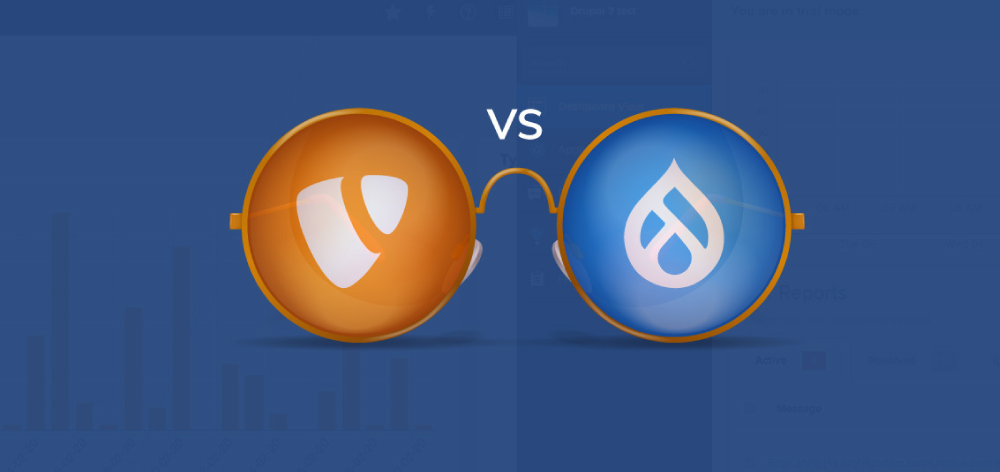
TYPO3 and Drupal are two popular open source based content management systems that are constructed with PHP and MySQL. They both allow users to create, manage, and expand websites of any size.
These two platforms are mainly employed by enterprises, governments, and non-profit organizations that require websites that are both dependable and adaptable. Although both of them are strong, they steer to different requirements and ways of working.
This blog compares TYPO3 vs. Drupal in a simple manner, side by side. It will be evident which CMS is more suitable for your objectives, team, and the kind of website after reading your blog.
| Feature | TYPO3 | Drupal |
| Launch Year | 1998 | 2001 |
| Ideal For | Enterprises, agencies, government | Developers, NGOs, universities |
| Language Stack | PHP + MySQL | PHP + MySQL |
| License | Open Source (GPL) | Open Source (GPL) |
| Default Editor | Rich backend with page tree and roles | Flexible content builder with fields and views |
| Multisite Support | Built-in, easy to manage | Supported, but needs complex setup |
| Multilingual Support | 50+ languages, built-in | 100+ languages, modular |
| Security Level | Enterprise-grade, very high | Strong, community-reviewed |
| Learning Curve | Moderate for editors | Steep for beginners |
| Extension System | Plug-and-play extensions | Developer-focused modules |
| Updates & Maintenance | Long-Term Support (LTS) versions | Frequent major updates |
| Community | Smaller but specialized | Larger, global, open community |
| Notable Brands | Sony, Philips, Mercedes, 3M | Tesla, Nokia, Harvard University, Timex |
TYPO3 and Drupal share a similar base but serve different users. TYPO3 focuses on large-scale, structured projects with enterprise needs. Drupal offers flexibility for developers who want full control over design, structure, and custom features.
An in-depth, side-by-side look at how both CMS platforms perform across key areas like speed, security, usability, and enterprise readiness.
TYPO3:
Drupal:
Verdict: For enterprise-scale speed and stability, TYPO3 is the winner.
TYPO3:
Drupal:
Verdict: Editor-friendly is TYPO3 whereas developers are more suited with Drupal.
TYPO3:
Drupal:
Verdict: When it comes to finance, government, and regulated sectors, TYPO3 is more dependable.
TYPO3:
Drupal:
Verdict: The multi-brand management with TYPO3 is not only faster but also simpler.
TYPO3:
Drupal:
Verdict: Drupal offers more language options; TYPO3 offers easier setup.
TYPO3:
Drupal:
Verdict: TYPO3 is an editor’s tool; Drupal is a developer’s playground.
TYPO3:
Drupal:
Verdict: TYPO3 provides easier maintenance over the long term.
TYPO3:
Drupal:
Verdict: Drupal is bigger in terms of community, while TYPO3 is more focused on enterprise-level support.
Verdict: Both power major brands, TYPO3 dominates in Europe; Drupal thrives in North America.
TYPO3 is a perfect fit for businesses that operate multiple websites or digital platforms on a large scale. The main emphasis is on organizing, securing, and optimizing team workflows. Editors can manage multilingual content, permissions, and version control without any hassle.
Besides, TYPO3 is also a new and secure choice for big companies that want to rely on the system without the need to perform tons of maintenance, thanks to its long-term support (LTS) and regular updates.
In addition, it becomes a total solution for long-term digital growth when it smoothly opens up to accessibility and marketing tools.
The decision to go with Drupal is a wise one when the project demands deep level customization and advanced functionalities. The developers are given absolute freedom over content models, APIs, and workflows.
This, in turn, makes it the best fit for universities, NGOs, and organizations that require unique and data-intensive websites.
Though the setup and coding are more, Drupal grants the teams the freedom to create complicated digital experiences and custom integrations exactly in the way they want.
Enterprise in 2025 will require a CMS that offers more than simple content management. They need a system focused on scalability, automation, and long-term reliability. TYPO3 checks all the boxes with enterprise-ready tools, AI-powered functionality, and excellent support for complex digital landscapes.
TYPO3 combines enterprise stability, automation, and flexibility, making it the top choice for organizations that value long-term performance, scalability, and smart content management.
Choosing between TYPO3 and Drupal becomes easier when you look at their strengths and weaknesses side by side. Each CMS has its own focus, TYPO3 prioritizes stability and enterprise structure, while Drupal emphasizes flexibility and developer freedom.
| Criteria | Pros | Cons |
| Performance | Fast and stable for enterprise websites with built-in caching. | Needs expert setup for complex configurations. |
| Usability | Editor-friendly backend and structured content workflow. | Initial setup requires developer involvement. |
| Extensions | Plug-and-play extensions available via TER and T3Planet. | Smaller ecosystem compared to Drupal’s vast module base. |
| Maintenance | Predictable Long-Term Support (LTS) and smooth updates. | Manual updates needed for some third-party extensions. |
TYPO3 is perfect for enterprises that value structure, consistency, and long-term growth. Once configured, it’s reliable, secure, and efficient for managing complex digital ecosystems.
| Criteria | Pros | Cons |
| Performance | Flexible caching options and scalable with proper optimization. | Can slow down with large enterprise deployments. |
| Usability | Highly customizable and flexible for developers. | Steep learning curve for beginners and non-technical users. |
| Extensions | Huge library of community-developed modules. | Modules often require coding and manual configuration. |
| Maintenance | Large, active global community offering quick support. | Major version upgrades can be complex and time-consuming. |
Drupal is a great fit for developer-driven teams that want complete control and customization. It’s powerful and versatile but requires more effort and expertise to maintain at scale.
TYPO3 delivers stability and scalability for enterprise teams, while Drupal offers flexibility and freedom for developer-led projects. The right CMS depends on whether you prioritize long-term reliability or technical customization.
Both TYPO3 and Drupal are reliable open-source CMS platforms trusted by enterprises around the world. They share common strengths in flexibility, scalability, and community support, yet they serve different priorities.
Choose TYPO3 if you want long-term stability, enterprise-grade security, and efficient multisite management. It’s the right fit for organizations that need structured content workflows, accessibility, and predictable long-term support.
Choose Drupal if your team values developer freedom, deep customization, and complex data architectures. It’s ideal for technically skilled teams building large, highly customized digital experiences.
Final Takeaway: TYPO3 delivers faster enterprise adoption and easier maintenance, while Drupal offers unmatched flexibility and control for developer-driven projects.
Choosing the right CMS depends on your project’s goals, available resources, and your team’s technical expertise. Both TYPO3 and Drupal can power modern digital experiences, the best choice depends on whether you value structure or flexibility.
If you’re exploring TYPO3, try it firsthand with ready-made templates and AI-powered extensions from T3Planet. Experience how TYPO3 simplifies content management while scaling with your business needs.
Yes. TYPO3 is often preferred by enterprises for its scalability, security, and long-term support model.
TYPO3 is easier for editors thanks to its structured backend and intuitive page management tools.
Drupal allows deeper customization and control, making it ideal for developer-led projects.
Both are secure, but TYPO3 is known for stricter security policies and enterprise-level compliance.
Yes. TYPO3 offers built-in multilingual and multisite features, ideal for large organizations managing global websites.
Drupal has a larger global community, while TYPO3’s is smaller but highly specialized and enterprise-focused.
TYPO3, due to its predictable Long-Term Support (LTS) releases and backward compatibility.


Jürgen Pietschmann
TYPO3 Consultant at T3PlanetJürgen Pietschmann is a T3Planet Product Consultant at T3Planet Shop and Head of Technology at keeen GmbH. He specialises in integrating AI into editorial workflows – from intelligent content creation and automated SEO to…
More From Author